【Israeli Tourist】Lower Back and Left Hip Pain After Deadlifting | Electroacupuncture & Combination Therapy in Osaka
Lower Back Pain After Deadlifting: A…
症例を詳しく見る施術の詳細情報を表示
- 年代
- 30代


GREFUL / CASE REPORT
CASE OVERVIEW
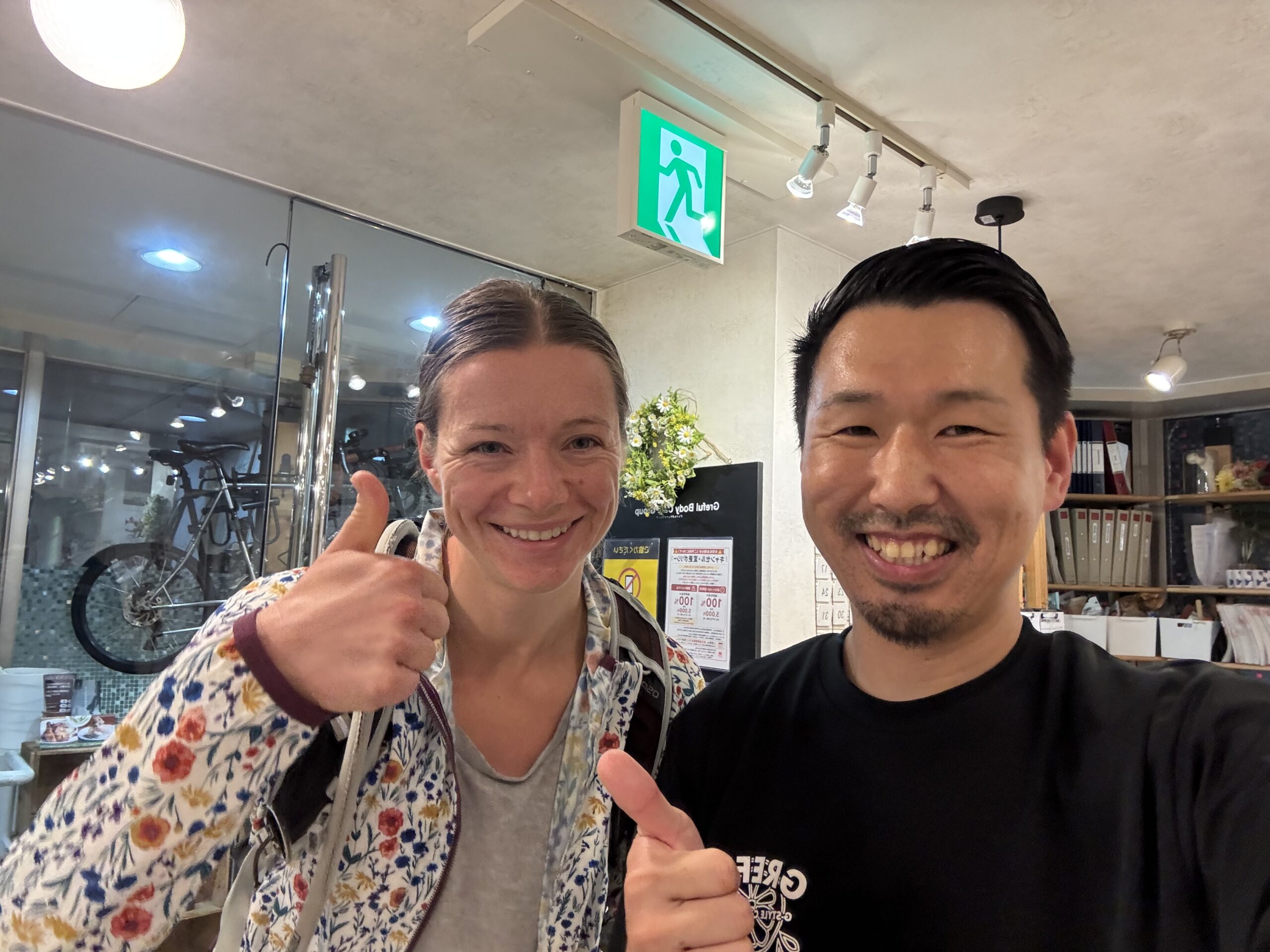
A tourist from the Czech Republic visited GREFUL Acupuncture & Seitai Clinic in Shinsaibashi, Osaka, seeking chiropractic care during a trip to Japan.
The patient works as an engineer and regularly participates in strength training. Despite having a muscular physique, the patient experienced severe muscle tightness around the neck, shoulders, and back, accompanied by a strong sense of physical fatigue and heaviness.
One of the main concerns was significantly restricted mobility in the left hip. The limited range of motion was affecting certain movements during strength training.
Although the patient had well-developed muscles, overall flexibility was poor, and several muscle groups felt unusually tight.
The main concerns included:
1. Severe muscle tightness around the neck and shoulders.
2. Persistent stiffness and a heavy, fatigued feeling in the back.
3. Limited flexibility despite regular strength training.
4. Significantly restricted movement of the left hip.
5. Difficulty performing certain training movements comfortably because of limited hip mobility.
The patient wanted to address these physical limitations while visiting Japan and was particularly interested in chiropractic-style manual care.
After discussing the symptoms and assessing the physical condition, we focused on muscle tension and joint mobility, using Japanese Shiatsu Seitai and joint mobilization techniques.
A tourist from the Czech Republic visited GREFUL Acupuncture & Seitai Clinic in Shinsaibashi, Osaka, seeking chiropractic-style care during a trip to Japan. The patient works as an engineer and regularly participates in strength training but was experiencing severe muscle tightness around the neck, shoulders, and back.
Despite having a muscular physique, the patient demonstrated limited flexibility and significantly restricted mobility in the left hip. The reduced range of motion was affecting certain movements during strength training.
After receiving Japanese Shiatsu Seitai and joint mobilization, the patient’s left hip mobility showed partial improvement. However, muscle tightness and some mobility restrictions remained, indicating that further assessment and continued care would be appropriate.
Strength training can improve muscle strength, endurance, and muscle mass. However, having well-developed muscles does not automatically mean that every joint has an unrestricted range of motion.
Flexibility is influenced by several factors, including muscle and soft-tissue characteristics, joint anatomy, movement habits, and neuromuscular control.
Some physically active individuals may have excellent strength but still experience limited flexibility or difficulty performing certain movements.
For this reason, evaluating physical performance involves more than assessing muscle size or strength alone.
Strength training does not necessarily reduce flexibility. Resistance exercises performed through an appropriate range of motion may help maintain or improve joint mobility.
However, individual exercise habits, training intensity, movement patterns, recovery, and pre-existing physical limitations may influence how the body feels and moves.
The presence of muscle tightness does not necessarily indicate that strength training caused the problem.
Some engineering roles involve prolonged computer use, repetitive tasks, or spending extended periods in the same position.
These activities may contribute to physical discomfort in certain individuals, particularly when combined with limited movement breaks, fatigue, or other lifestyle factors.
However, neck and shoulder stiffness cannot automatically be attributed to poor posture or desk work. Sleep, physical activity, stress, medical conditions, and individual factors may also influence symptoms.
In this case, the patient experienced pronounced muscle tension in the neck, shoulders, and back, although the exact cause was not established.
People with severe muscle stiffness sometimes request stronger massage pressure in the hope of obtaining faster relief.
However, applying greater pressure does not necessarily lead to better results.
Excessive pressure can cause discomfort or irritation, particularly when muscles are already sensitive or tense.
In this case, the muscles did not relax quickly even when relatively firm pressure was applied. This highlighted the importance of adapting the treatment rather than simply increasing its intensity.
The hip joint plays an important role in everyday movement and exercise, including walking, squatting, bending, and many lower-body strength-training movements.
Limited hip mobility may influence how an individual performs certain exercises and can affect movement strategies during training.
However, a restricted range of motion does not automatically indicate an injury or a structural problem.
The significance of the restriction depends on the individual’s anatomy, symptoms, exercise goals, and overall movement function.
Reduced hip mobility may be associated with muscle or soft-tissue tension, individual anatomical differences, joint-related conditions, or other physical factors.
A manual assessment can help identify movement restrictions, but it cannot always determine their underlying medical cause.
Persistent or painful hip restrictions may require assessment by a medical professional or physiotherapist.
Some individuals experience a short-term change in their range of motion after manual therapy or joint mobilization.
In this case, a partial improvement in left hip mobility was observed following treatment.
However, some restriction remained. A single session cannot guarantee that mobility will be fully restored or that the underlying reason for the restriction has been resolved.
Shiatsu is a Japanese form of manual bodywork that uses pressure applied with the hands, fingers, and thumbs.
Shiatsu techniques are commonly used as part of relaxation and musculoskeletal bodywork services.
At GREFUL in Shinsaibashi, manual techniques are selected according to each guest’s physical condition, reported symptoms, and treatment preferences.
Seitai is a broad Japanese term often used to describe manual approaches focused on the musculoskeletal system, movement, and physical balance.
The specific techniques may vary between practitioners and clinics.
Although some visitors search for chiropractic treatment in Japan, chiropractic care and Japanese Seitai are not necessarily identical services.
Joint mobilization involves controlled passive movement of a joint, performed within a range considered appropriate for the individual’s condition.
It may be used as part of a broader approach to assessing and managing certain movement restrictions.
During this patient’s visit, joint mobilization was used to address the marked restriction in left hip mobility.
Following the session, the restriction became less pronounced, although complete restoration of movement was not confirmed.
Yes. Muscle strength, muscle size, and flexibility are different characteristics. Regular strength training does not guarantee that every muscle or joint will have an unrestricted range of motion.
Some people experience temporary relief from muscular discomfort or an increased sense of relaxation after manual bodywork. However, individual results vary, and Shiatsu does not replace medical assessment when it is needed.
No. Stronger pressure is not always more effective. The intensity of manual therapy should be adapted to the individual’s comfort, physical condition, and response to treatment.
Some individuals experience immediate changes in joint range of motion after manual therapy. In this case, a partial improvement in left hip mobility was observed, but the limitation was not fully resolved.
No. Chiropractic care and Japanese Seitai are distinct approaches, although some manual techniques may overlap. Visitors should confirm which treatments are available and appropriate for their condition.
Yes. GREFUL welcomes international visitors to Osaka. Our staff primarily speak Japanese, but simple English and translation tools may be used to support communication when needed.
If hip mobility remains significantly restricted, becomes painful, worsens, or interferes with walking and daily activities, medical or physiotherapy assessment may be appropriate.
GREFUL Acupuncture & Seitai Clinic is located in Shinsaibashi, central Osaka, and welcomes international visitors seeking Japanese bodywork during their stay in Japan.
Our services include Japanese Shiatsu and Seitai techniques, with attention to individual concerns such as neck and shoulder stiffness, back discomfort, muscle tension, and joint movement limitations.
For more information about available treatments, please visit our Japanese Shiatsu & Seitai in Osaka service page.
You can also visit the GREFUL English Website for general clinic information and booking guidance.
If you are visiting Osaka and experiencing muscular stiffness or movement-related discomfort, please contact our clinic to discuss whether a treatment session may be suitable for your condition.
Medical disclaimer: This article describes an individual case and is intended for general educational purposes. Treatment results vary. Shiatsu, Seitai, and joint mobilization do not replace appropriate medical diagnosis or necessary healthcare.
| 年代 | 30代 |
|---|---|
| 性別 | 女性 |
| 初回の身体評価 | During the initial physical assessment, we focused on muscle tension in the neck, shoulders, and back, as well as the patient's overall flexibility and left hip mobility. 1. Severe Neck and Shoulder Muscle Tension Significant muscle tightness was observed around the neck and shoulders. The surrounding soft tissues felt particularly tense, and the patient reported a strong sense of stiffness and physical fatigue. Although the patient works as an engineer, the available information does not establish whether prolonged desk work or any specific occupational activity directly caused the symptoms. 2. Marked Back Muscle Tightness The back muscles also demonstrated considerable tension and resistance to manual pressure. Even when relatively firm pressure was applied, the muscles did not appear to relax quickly. This suggested that simply increasing treatment pressure would not necessarily produce better results. Careful adjustment of the treatment intensity and attention to the patient's physical response were important. 3. Muscular Physique with Limited Flexibility The patient regularly performs strength training and has well-developed muscles. However, the assessment revealed pronounced muscle tightness and limited flexibility. Muscle size and strength are not the same as flexibility or joint mobility. Even individuals who exercise regularly may experience restrictions in certain movements. 4. Significant Restriction of Left Hip Mobility The left hip demonstrated a marked limitation in range of motion. The patient reported that this restriction affected movements during strength training. Restricted hip mobility can influence how a person performs exercises such as squats and other lower-body movements. However, the exact cause of the limitation could not be determined from the available findings alone. Muscle tension, joint structures, individual anatomy, and other factors may all contribute to reduced hip mobility. 5. Overall Physical Assessment The main findings were severe muscle tension throughout the upper body, limited overall flexibility, and significantly restricted movement of the left hip. Despite regular strength training, the patient was experiencing functional movement limitations. Based on these findings, we selected a combined approach using Japanese Shiatsu Seitai and joint mobilization, with particular attention to the left hip. The aim was to address musculoskeletal discomfort and assess whether hip mobility could improve without forcing the joint beyond its comfortable range. |
| 実際に行った施術 | The patient initially visited our clinic seeking chiropractic care. After assessing the patient's condition, the documented treatment included Japanese Shiatsu Seitai and joint mobilization techniques, with particular attention to the severe muscle tightness and restricted left hip mobility. 1. Japanese Shiatsu Seitai Japanese Shiatsu Seitai manual techniques were used to address muscular tension and discomfort. The patient had particularly tight muscles around the neck, shoulders, and back. Even with relatively firm manual pressure, the muscles did not respond with immediate or substantial relaxation. Rather than relying solely on stronger pressure, the treatment approach considered the condition of the soft tissues and the patient's response to manual techniques. 2. Joint Mobilization for the Left Hip The initial assessment revealed significant restriction in the left hip's range of motion. Joint mobilization techniques were applied to address this movement limitation. Joint mobilization involves controlled passive movements performed within a range considered appropriate for the joint and the patient's condition. The aim was to improve functional mobility without forcing the hip beyond its tolerable range. 3. Combined Approach to Muscle and Joint Mobility The session incorporated both Shiatsu Seitai and joint mobilization rather than focusing exclusively on muscle pressure. This approach considered the relationship between muscle tension, joint movement, and physical activities such as strength training. 4. Post-Treatment Hip Mobility Assessment After the session, a partial improvement in left hip range of motion was observed. Although the movement restriction had decreased, normal or unrestricted mobility had not been fully restored. The severe muscle tightness and remaining hip restriction indicated that further assessment and ongoing care would be appropriate. The available record does not confirm a specific improvement in neck, shoulder, or back symptoms immediately after treatment. The documented change was the partial improvement in left hip mobility. |
| 施術回数・期間 | 初回 |
| 施術経過・変化 | Before treatment, the patient demonstrated pronounced muscle tightness around the neck, shoulders, and back, along with limited overall flexibility and significantly restricted movement of the left hip. Although the patient regularly performs strength training and has a muscular physique, certain movements were limited by reduced hip mobility. During manual treatment, the upper-body muscles remained considerably tight and did not relax quickly, even with relatively firm pressure. We therefore used a combination of Japanese Shiatsu Seitai and joint mobilization. 1. Change in Left Hip Mobility Following treatment, the range of motion in the left hip showed partial improvement. The restriction became less pronounced, indicating a positive immediate change in mobility. However, some limitation remained, and the joint had not regained fully unrestricted movement. 2. Neck, Shoulder, and Back Muscle Tension Significant muscular tightness was noted during the initial assessment and treatment. The muscles did not show rapid relaxation in response to pressure. The available information does not include objective measurements or a confirmed post-treatment improvement in these areas. 3. Need for Continued Care Because of the pronounced muscle tension and persistent restriction in left hip mobility, further evaluation and ongoing care were recommended. If the mobility limitation continues or is associated with pain, further assessment by a medical professional or physiotherapist may be appropriate. 4. Overall Outcome The treatment produced a partial immediate improvement in left hip mobility. However, the underlying cause of the restriction was not established, and the long-term outcome remains unknown. This case illustrates that regular strength training and well-developed muscles do not automatically guarantee unrestricted joint mobility or flexibility. |
| 施術の注意点・リスク | Severe muscle tightness and restricted joint mobility can have several possible causes. Muscle tension alone does not establish the underlying cause of a mobility restriction. Limited hip movement may be related to muscle and soft-tissue factors, individual joint anatomy, structural conditions, or other health concerns. If hip mobility remains significantly restricted, becomes painful, or worsens over time, an assessment by a medical professional or physiotherapist is recommended. Stronger massage pressure does not necessarily produce better results. Excessive pressure may cause discomfort, temporary soreness, or irritation of the soft tissues. Joint mobilization should be performed carefully and adapted to the patient's physical condition, range of motion, and any relevant medical contraindications. Temporary soreness, fatigue, or discomfort may occur after manual treatment. If severe hip pain, sudden loss of mobility, numbness, significant muscle weakness, or difficulty walking develops, medical assessment is important. The partial improvement in hip mobility observed immediately after treatment does not confirm that the underlying cause has been resolved. Treatment outcomes vary between individuals, and this case does not guarantee similar results for other patients. Manual therapy should not replace appropriate medical diagnosis or necessary healthcare. |
| 施術料金 | 75min/¥21,000 |
| 担当施術者 | YAMAMOTO |
※施術内容・経過には個人差があります。同じ結果を保証するものではありません。
Lower Back Pain After Deadlifting: A…
症例を詳しく見る
Sciatica-Like Pain and Walking Diffi…
症例を詳しく見る
